

1.Moriyama Daido’s Tokyo: ongoing
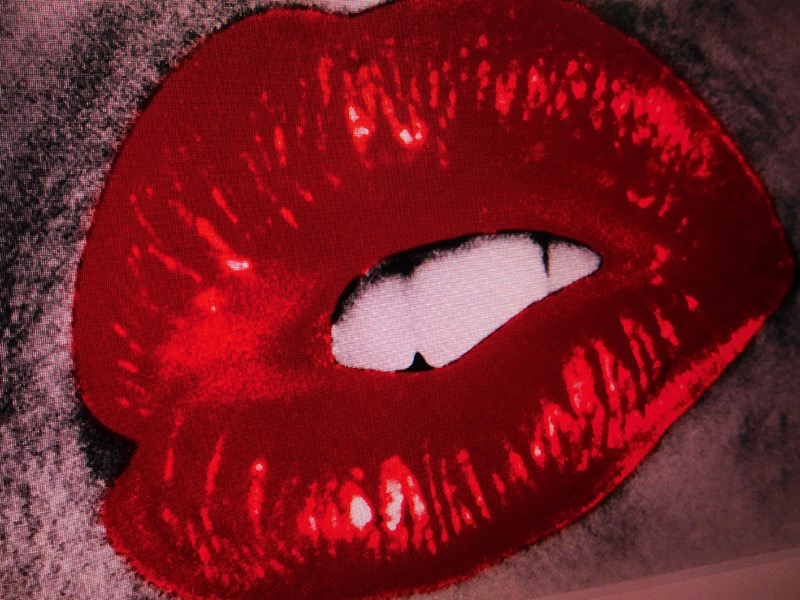
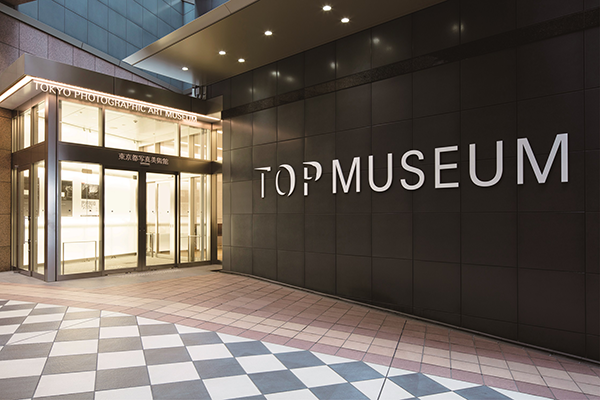
The Tokyo Photographic Art Museum in Ebisu is running an exhibition of photographer Moriyama Daido’s latest work until Tuesday, September 22nd. Moriyama, hailed as the godfather of Japanese street photography, remains actively involved on the front lines of the photography world and won the Hasselblad Foundation International Award in Photography—the so-called Nobel Prize of Photography—in 2019. This exhibition is Moriyama’s first major exhibition in Japan since receiving the award. It features approximately 170 photos from Moriyama’s ongoing body of work documenting Tokyo’s streets, which he has been doing since becoming a freelance photographer in 1964. Although he is known for monochrome works characterized by his are-bure-boke (grainy, blurry, out-of-focus) style, this exhibition includes both monochrome and color photos displayed in a way that invites visitors to experience different aspects of his creative vision.
2.About Moriyama Daido

Moriyama Daido was born in 1938 in the city of Ikeda in Osaka. After working for a time as a graphic designer, he became the assistant to renowned Osaka-based photographer Iwamiya Takeji in 1960. He moved to Tokyo after just a year and a half, and became the first assistant to the up-and-coming photographer Hosoe Eikoh. He became a freelance photographer a few years later.
The work that Moriyama submitted to the monthly photography magazine Camera Mainichi was highly praised, and he was recognized with the New Artist Award from the Japan Photo Critics Association. His photography subsequently appeared in magazines like Asahi Camera, Asahi Journal, Taiyo, and more. Between 1968 and 1970, he joined the experimental photography magazine Provoke and made waves in the Japanese photography community with his radical are-bure-boke (grainy, blurry, out-of-focus) style. Moriyama has been walking the streets of Tokyo daily for close to 60 years now, actively and consistently capturing snapshots of everyday scenes.
.jpg)
3.Recommended Moriyama Daido Works
●Farewell Photography
This is a revised reprinting of Moriyama’s 1972 photobook, generally considered one of his most influential works. Comprised of a seemingly random combination of photos—many of which depict an unidentifiable subject—it represents the peak of his are-bure-boke style. He casts aside all conventions of the medium in what amounts to the photographic equivalent of punk rock.
●Light and Shadow
This is a revised reprinting of Moriyama’s seminal 1982 photobook. After Farewell Photography, Moriyama fell into a creative rut and was unable to take photos for quite a while; he was suffering from burnout after his obsessive quest to answer the question “What is photography?” In this book, he arrives where he first started—black and white photos that are simply about capturing the light and shadow in front of him as is.
●New Shinjuku (2014)
This collection of photos compiles works from his 2003 Mainichi Art Award-winning photobook Shinjuku, and his follow-up, 2006’s Shinjuku+, in addition to a number of never-before-seen works.
●Tokyo (2020)
This book takes the reader on a sightseeing tour of Tokyo through Moriyama’s street photography. It includes black and white photos of Roppongi, Ginza, Tsukiji, Shibuya, Harajuku, Shinjuku, Asakusa, Ueno, Ikebukuro, Odaiba, Nakano, and more. The cover design is heavily inspired by a world-famous series of travel guides.
4.Reflections on the Exhibition
Expats (chiefly from Europe) have often admitted to me something among the following lines: “Tokyo is an amazing city, but I think Osaka and the Kansai region would be a more comfortable place to live." When I ask what they mean by that, they explain that it’s not that Tokyo is inconvenient (although it does have the most overly-complex public transportation network int he world), nor is it that Tokyo lacks abundance (there are few things you can’t get your hands on in Tokyo). Rather, they say, it’s that Kansai people are more open and honest and blunt, warmer and more full of cheer. They’re just friendlier and easier to talk to. In Tokyo you always have to be worried about how others are seeing you, but in Kansai people are more willing to overlook or give social faux pas.
Another part of it is the feel of the urban centers. Tokyo may be one of the world’s cleanest and safest cities, but for those who hail from cities like New York or San Francisco, London or Paris, they feel more comfortable in places covered in a little dirt and grime—a little personality. That's why foreigners are drawn to the narrow streets of a neighborhood like Shimokitazawa, the nightlife at Dogenzaka or Nombei Yokocho in Shibuya, and Golden Gai and Omoide Yokocho in Shinjuku. They want to see the other side of Tokyo. Meanwhile, over in Kansai, there is no facade—just raw cityscape.
Moriyama Daido’s street photography frequently wanders into the back alleys of neighborhoods like Shibuya, Harajuku, Shinjuku, and Shimokitazawa. The photos on display in “Moriyama Daido’s Tokyo: ongoing" are all about that grittier side of Tokyo. Although Moriyama is known for photographing the streets of Tokyo, his snapshots exude an unmistakable Kansai sensibility. He sees the world through a Kansai lens—an outsider’s lens…an alien lens. He has been walking the streets of Tokyo for nearly 60 years now, but as the saying goes, “It takes three generations to become an Edokko." (Edo is the former name for Tokyo.) The Tokyo perspective doesn’t come easy—and that goes not just for photographers but for expats, too. Of course, there are things about Tokyo that Moriyama can see only because he is an outsider. That, more than anything, explains his international reputation.
The difference in aesthetic values between Tokyo and the Kansai region are summed up in the character 粋, which can either be read iki (いき) or sui (すい). Iki is used in Tokyo to refer to something or someone that is chic and sophisticated, refined and urbane. Sui, on the other hand, is used in Kansai, and refers to someone who is worldly and streetwise, and familiar with the pleasure quarters. As the researcher Sugiura Hinako suggested, iki is a homonym for the Japanese word for breath, and thus refers to exhaling—that is, paring down and getting the unnecessary things out of your life. Sui, on the other hand, is similar to the Japanese word for inhale, and thus refers to someone who embraces the things that come into their life and takes everything in stride. Despite the best efforts of Kondo Marie, most Westerners resonate more with sui than iki.
In one of the essays at the front of the exhibition catalogue for “Moriyama Daido’s Tokyo: ongoing", Moriyama explains that he when he started to regularly set foot in Iwamiya Takeji’s studio, he started to think that photography was more up his alley than desk work. Truly, Moriyama’s work captures the human, vulgar side of urban Japan through the Kansai dialect of the language of photography.


